
BOTB grant helps answer the question - can fungi build better homes for cavity-nesting birds?
Birds on the Brink has awarded a grant for a field trial of innovative prosthetic nesting hollows grown from mycelium.
Standard nest boxes help conserve wildlife, but they sometimes fail by breaking soon after installation, overheating, or attracting the wrong species. Mycelium, the rootlike structure of fungi, offers a promising alternative. It is lightweight, insulating, carbon-neutral, biodegradable and can be shaped to mimic natural tree hollows, offering advantages over conventional designs.
The trial will take place at Blenheim Estate in Oxfordshire, United Kingdom, where researchers will compare 10 mycelium hollows with 10 standard nest boxes. The focus is on cavity-nesting songbirds such as the Marsh Tit (Poecile palustris), a species that has suffered severe declines over the past 50 years. Through the 2026 breeding season, the team will track which designs birds prefer, which species use them, and how many chicks successfully fledge.

Marsh Tit, one of the potential beneficiaries of the project. Photo ©Paul Sterry/Nature Photographers Ltd
This project unites ecology, design, and wildlife conservation. Dr Dan Parker (University of Oxford/Melbourne) and Dr Stanislav Roudavski (University of Melbourne; Deep Design Lab) will lend expertise in design for biodiversity. Dr Joanna Bagniewska, Dr Thomas Hesselberg, Filipe Salbany, and Dr Ada Grabowska-Zhang (University of Oxford) will provide ecological expertise.
The trial will deliver the first real-world evidence of how mycelium nests perform, guiding future conservation strategies and woodland restoration. Birds on the Brink will share updates as the project unfolds.
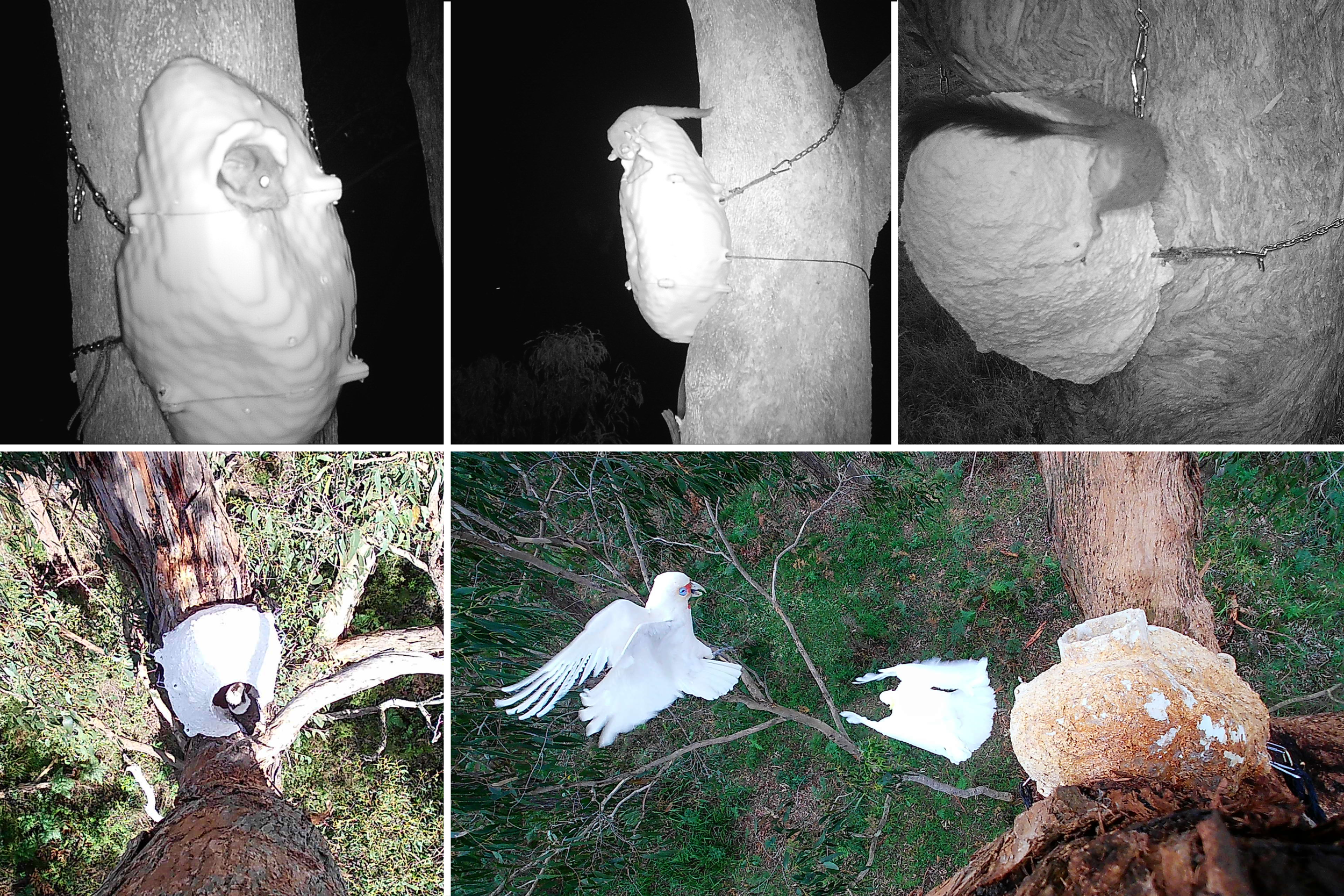
Innovative artificial hollows made from mycelium (top-left), 3D printed wood (top-middle), and hempcrete (bottom/right) at test sites in south Australia. Image by Deep Design Lab.
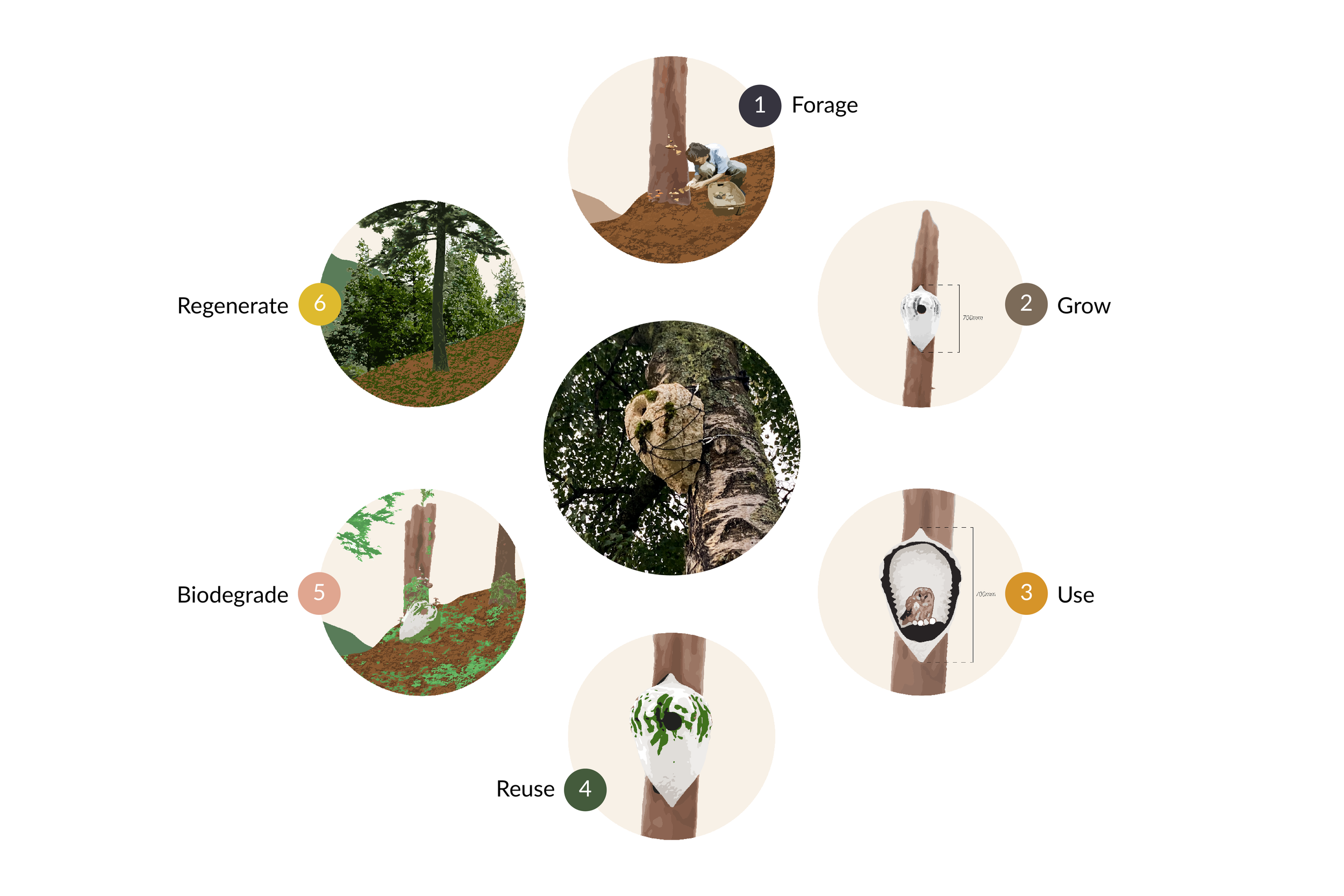
Design for a complete lifecycle of a mycelium hollow in Italy. Image by Deep Design Lab in Conservation Science in Practice.