
Further research funding for the Hawk Conservancy Trust's Egyptian Vulture Asia project
Birds on the Brink is pleased to have awarded the Hawk Conservancy Trust (HCT) a generous grant to continue its good work studying and helping to conserve migratory populations of Egyptian Vultures in Asia. The grant will fund two more GPS tracking devices, which will shed further light on migratory routes and key stop-off points on their journey.
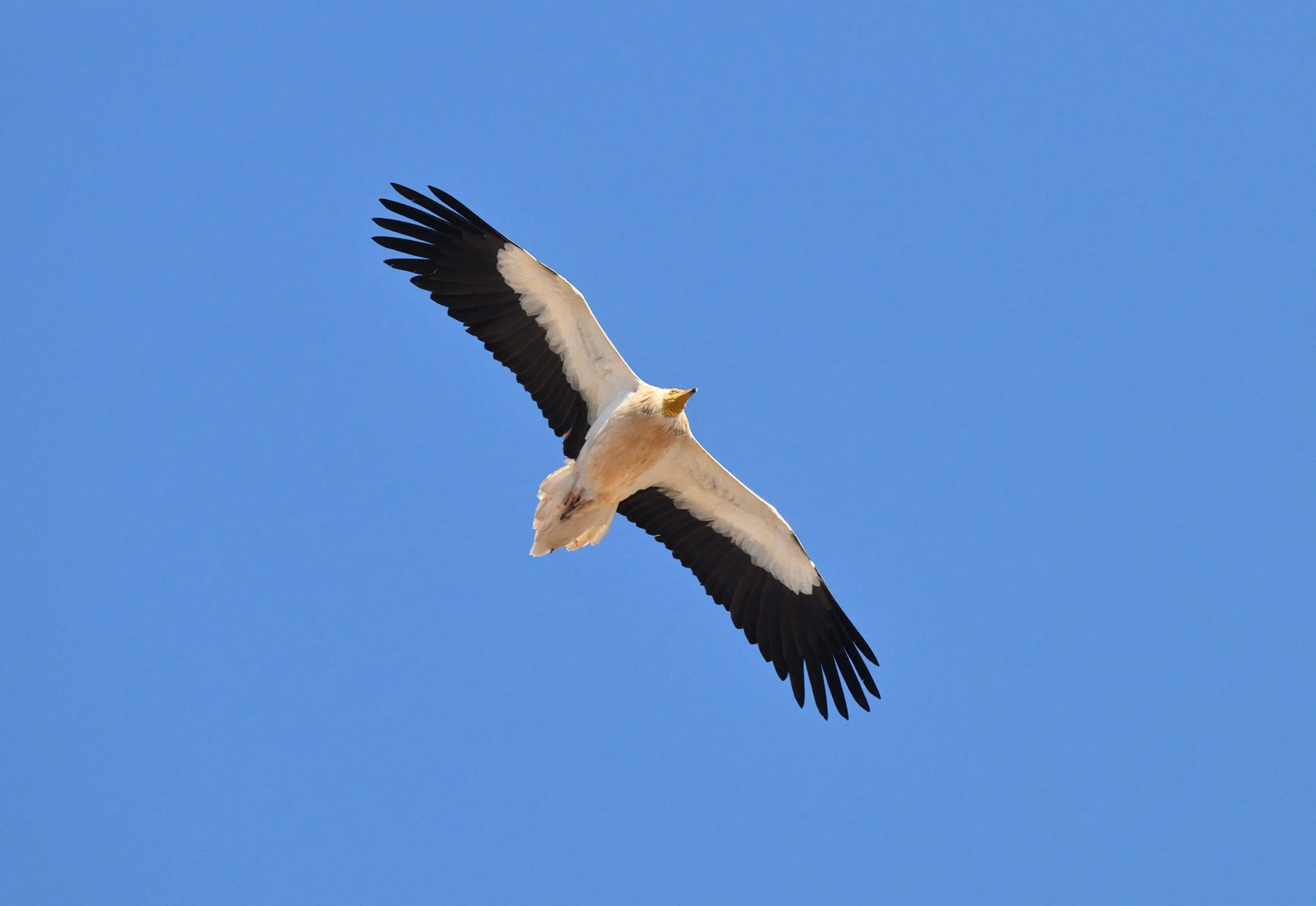
Migrating Egyptian Vulture. Photo ©Andrew Cleave
Birds on the Brink has funded previous Egyptian Vulture transmitters and HCT’s Dr Jamie McKaughan told us: ‘The project is continuing to make good progress and we have recently submitted a manuscript on the migration route patterns we are seeing from the data so far. The highlight has been that we can identify some specific bottleneck areas on the migration routes which could serve as key areas for protection and conservation efforts for these birds. We are hoping to have possibly 10 more Egyptian Vultures tagged this year, which would be a really significant number added in one field season. It would allow us to get some purposeful gaps filled – for example, tags on birds in different parts of Uzbekistan and some in neighbouring Tajikistan for example, in areas that are yet to be covered.’
Jamie continued: ‘This project provides the crucial starting point for a large-scale conservation and monitoring program based in central Asia along the central Asian migration flyway. The implications of future work in this project include informing the conservation of migratory routes, nest sites and overwintering areas for several other bird of prey species such as Griffon Vultures (Gyps fulvus), Cinereous Vultures (Aegypius monachus), Steppe Eagles (Aquila nipalensis), Eastern Imperial Eagles (Aquila heliaca) and many other species that breed in central Asia.’
Jamie ended by saying: ‘There has been a lot of progress made to date and since 2024 when Birds on the Brink last provided funding for this project. The field team has worked to expand community engagement in the project by engaging with local stakeholders in Uzbekistan as well as neighbouring countries including Kazakhstan, Tajikistan and Kyrgyzstan.’